

Everyday Representations

This is my hockey mask. The hockey mask represents the character Jason Voorhees from the Friday the 13th film series. Jason Voorhees’ hockey mask represents fear and horror, instantly identifying the slasher villain from Friday the 13th. Its scratched-up, dirty white surface, red markings, and holes closely match the film version, making it recognizable, though it omits Jason’s body, weapon, and movements. The mask successfully conveys menace on its own, but it distorts reality by turning ordinary sports gear into a symbol of terror, filtering out all normal, non-threatening aspects of a hockey mask.
Classification: Symbolic with a bit of iconic
The mask is symbolic because it represents fear and Jason’s identity through cultural association, not because of its literal function as sports equipment. However, it is also iconic since the mask visually resembles a real hockey mask.
Classification: Symbolic with a bit of iconic
The mask is symbolic because it represents fear and Jason’s identity through cultural association, not because of its literal function as sports equipment. However, it is also iconic since the mask visually resembles a real hockey mask.
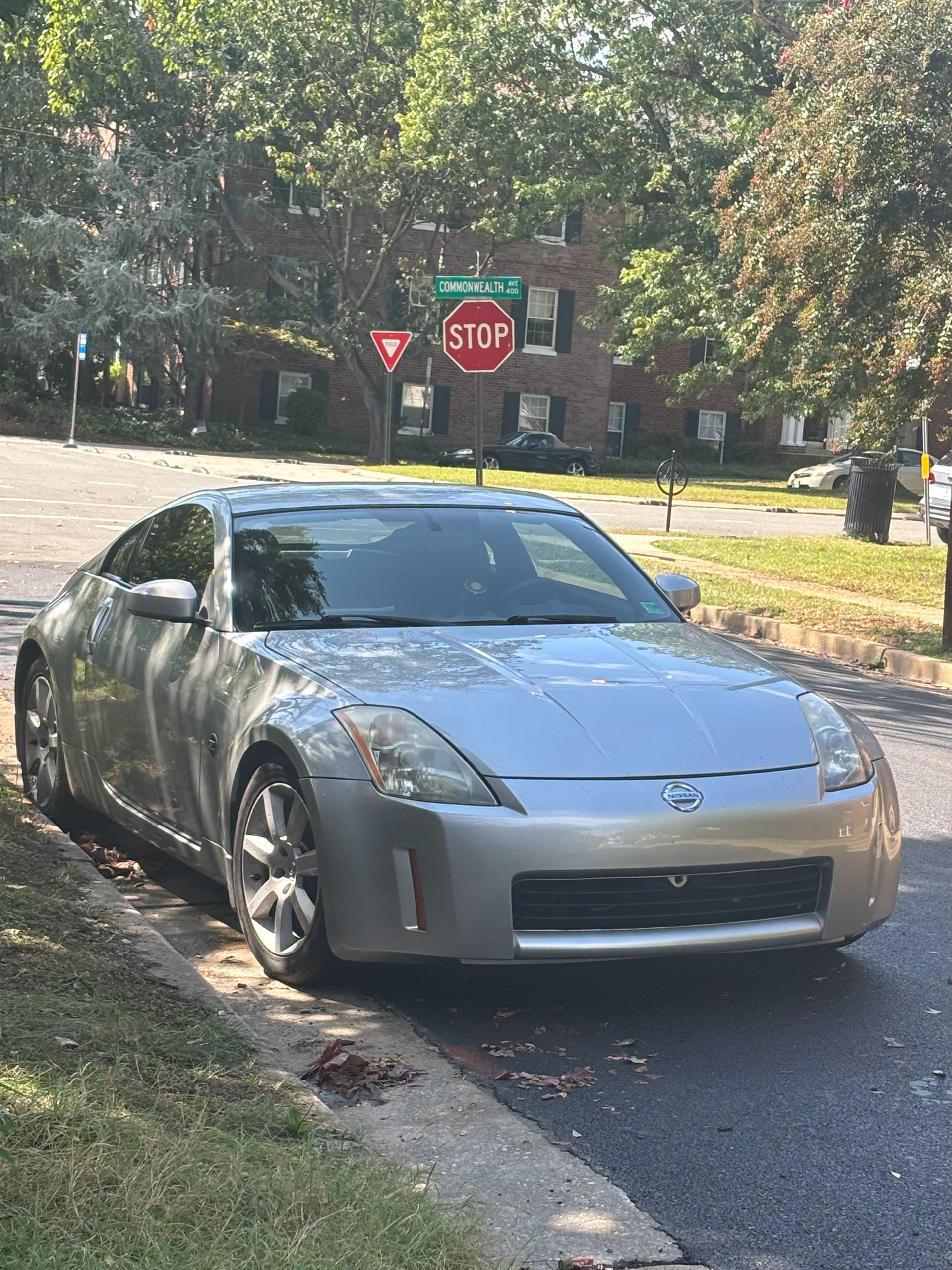
This is my car. My car is a 2003 Nissan 350z. The 350Z represents a sporty, high-performance car, symbolizing speed, style, and automotive design. Its sleek silver exterior, aerodynamic curves, and two-door coupe shape make it an accurate representation of the real vehicle, clearly communicating its identity as a performance-oriented sports car. However, this representation filters out the full driving experience, including engine sound, handling, and interior comfort, which are essential to understanding the car fully. It also slightly distorts reality by emphasizing aesthetics and excitement over practical aspects like fuel efficiency or everyday usability, creating a glamorized version of the car that highlights its sporty appeal.
Classification: Iconic
The image of the 350Z is iconic because it directly resembles the actual car in shape, color, and design. It’s a representation based on visual likeness, not cultural symbolism.
Classification: Iconic
The image of the 350Z is iconic because it directly resembles the actual car in shape, color, and design. It’s a representation based on visual likeness, not cultural symbolism.
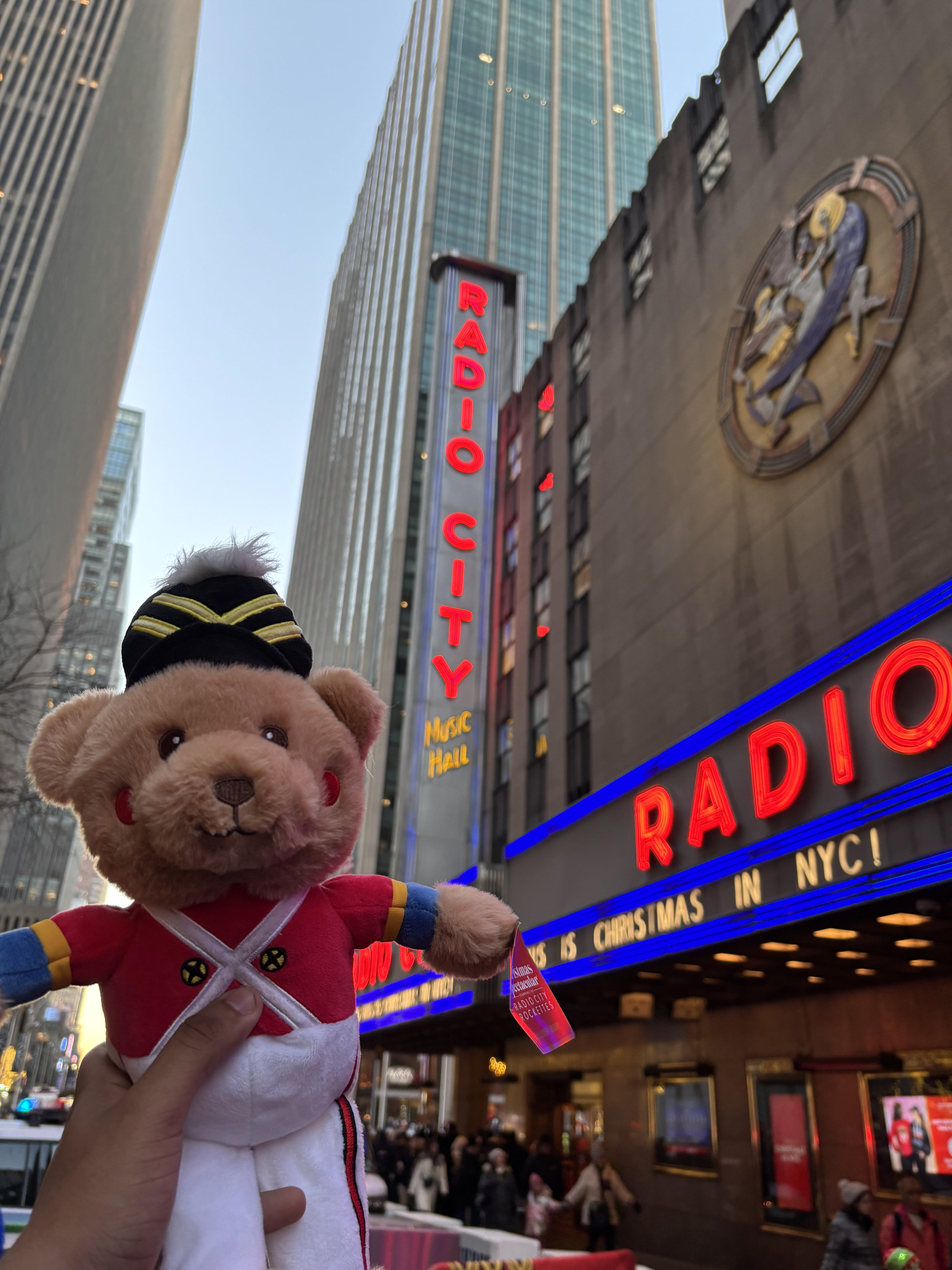
This is my stuffed bear. The bear was from the Christmas spectacular hosted at Radio City Music Hall. This bear represents a playful, whimsical version of the iconic holiday nutcracker, blending childhood innocence with theatrical tradition. Its bright costume, tall hat, and decorative details mimic actual nutcrackers, making it a recognizable, though imaginative, representation. The bear successfully conveys festive charm and humor, but it filters out the human precision, posture, and performance context of an actual nutcracker. It also distorts reality by replacing a disciplined human figure with a cute, approachable animal, transforming seriousness into whimsy.
Classification: Iconic and symbolic
This bear is iconic because the costume visually imitates the recognizable uniform of a toy soldier. It is also symbolic because it represents holiday cheer, nostalgia, and whimsy beyond the literal bear or costume. It conveys cultural meaning because of the imagery of the Rockettes’ tradition.
This bear is iconic because the costume visually imitates the recognizable uniform of a toy soldier. It is also symbolic because it represents holiday cheer, nostalgia, and whimsy beyond the literal bear or costume. It conveys cultural meaning because of the imagery of the Rockettes’ tradition.
As a group, list two (2) things/ideas from this week’s lecture that members of the discussion group found interesting. Write a short description of why they were interesting.
Yenni: Using anime to explain philosophical theory makes abstract ideas more accessible and visually engaging.
Aaliyah: The idea that readers create meaning, not authors, shifts power dynamics in literature.
Then list two (2) things/ideas from this week’s lecture that members of the discussion group found difficult or confusing. Write a short description of how the group worked through discussing these difficult/confusing ideas. (Did you come to any conclusions as a group?).
Rocky: How do we address specific needs without creating hierarchies? Balancing unity and specificity is complex.
Alyse: From the video about performative behaviours, it was a little unclear about what really qualified as performance vs performative. While discussing this (regarding the topic of the video), we took note of the idea that genders and their “roles” are more like man-made constructs in society. For something to be performative, it would have to produce a continuous reaction; however, this would argue against the reality that some people do not feel within themselves that they are female, male, or either.
Also, list one (1) thing/idea that you encountered in the required All Links (Week 6) list that members of the discussion group enjoyed. Write a short description of why it was enjoyable.
Aaliyah: In Duck Amuck, we enjoyed the humor and creativity. Daffy Duck’s identity is constantly destabilized by an unseen animator, echoing post-structuralist ideas about the instability of meaning and the constructed nature of identity. It’s a brilliant example of theory in practice.
Then list one (1) thing/idea that you encountered in the required All Links (Week 6) list that members of the discussion group could not agree on. Write about what sorts of different responses members of the group had to this particular thing/idea.
Alyse: One thing that was discussed was the topic of the hierarchy of oppression. While yes, it would be ideal to live in a world where everyone is equal under the same standards of human rights and respect, this isn't entirely realistic. Not to say that there should be a hierarchy of oppression, but conflict typically provides an effective means for change. In certain situations, it can be beneficial and even necessary for people to feel uncomfortable.
Make questions
Alyse:
Alyse:
Muñoz talks about focusing on what queer acts do instead of what they mean. Why do you think that shift matters when studying performance or identity?
Rocky;
How does Tony Just’s performance in a public men’s restroom serve as an example of a “queer act,” according to Muñoz?
How does Tony Just’s performance in a public men’s restroom serve as an example of a “queer act,” according to Muñoz?
In what ways does Muñoz suggest that queerness resists traditional forms of evidence and instead exists through ephemeral traces like innuendo, gossip, and fleeting performances?
Aaliyah:
Why do you think some scholars push back against using personal stories or performance as real evidence? Do you think that kind of “proof” can be just as powerful?
How does the idea of “ephemera” like memories, feelings, or moments help us understand queer experiences that don’t fit into traditional archives or history books?
OBSERVATION
(Copy Paste SOON)
Watch Citizen Jane and read the required text by Judge Learned Hand (1944) and Lincoln Caplan (2024), then answer these questions with your discussion group:
In what ways could Jane Jacobs be considered a designer?
She designed with words, community, and vision. Her book laid out a blueprint for how cities should function, emphasizing mixed-use spaces, walkability, and human-scale neighborhoods. She designed not with blueprints but with principles that influenced how people think about urban life.
What were three (3) methods/tactics used by Jane Jacobs in her work to save Washington Square Park?
She rallied local residents, students, and activists to protest and speak out.
She helped organize rallies and used the press to bring attention to the issue.
Jacobs and her allies lobbied city officials and used public hearings to challenge the plans, showing that community voices mattered.
Identify and name similarities between the movie and the text. Identify and name differences between the two.
Similarities:
1. Spirit of Liberty Speech: “I often wonder whether we do not rest our hopes too much upon constitutions, upon laws, and upon courts. These are false hopes; believe me, these are false hopes. Liberty lies in the hearts of men and women.”
2. They highlight the importance of civic engagement. Jacobs through urban activism, and Hand through his call of liberty rooted in conscience and humility.
Differences:
The film is action-oriented, showing Jacobs in the trenches of urban battles, while the texts are more philosophical, reflecting on liberty and democratic values.
The film is visually and emotionally engaging, while the texts require reflection and interpretation.
Based on watching the movie and reading the required text (or one of the alternative texts provided), what is the role of the individual in a democracy? (Specifically, cite the reading in the response.)
The role of the individual in a democracy is to actively participate, question authority, and protect the values that make democracy meaningful. In the film, Jacobs embodies this by standing up to powerful interests and defending the character of her city. In Judge Learned Hand’s speech, he says, “Liberty lies in the heart of men and women; when it dies there, no constitution, no law, no court can even do much to help.” This means that democracy isn’t just about institutions but about individual conscience, humility, and the willingness to listen and engage. Caplan’s article reinforces this by showing how Hand’s legacy reminds us that liberty depends on our daily choices and our openness to others' perspectives.Doing nothing
(COPY PASTE SOON)
As a group, try using McLuhan’s Tetrad to analyze a media/medium (this could be an object, a process, an application…) of your choosing. Like the Semiotic Square this is a working tool, so test out different ideas until you hit on something you like and feel is strong as a group.
1. Write down the media/medium.
2. Then write short descriptions answering each of the four questions to describe the effects of this media/medium.
3. When done writing a final response as a group, make sure all group members have a copy of the text. Make sure to include the names of everyone in your group who participated and when and where your conversation occurred.
What does the medium or artifact ENHANCE or intensify or what does it make possible?
Electric cars are seen as a more “eco-friendly” form of transportation. Since they are fueled with electricity, they don’t require gas.
When pushed to the limits of its potential, the new Medium or artifact will tend to reverse what had been its original characteristics. What is the REVERSAL potential of the new form?
When you push an electric car to the extreme, it kind of flips its original promise of being simple and sustainable. Chasing maximum efficiency can actually strain the environment because of all the battery production, make things more complicated with advanced software, and even take away some driver freedom through geofencing and automation. Instead of freeing up mobility, it risks turning into a tightly controlled, resource-heavy machine.
What recurrence or RETRIEVAL of earlier actions and services is brought into play simultaneously by the new medium or artifact? What older thing or action is brought back in the new form?
This is a newer type of car, but it still functions as a familiar form of transportation. It is an improvement of typical gas cars, the first automobile made in 1885, and a much bigger improvement from horse carriages.
If some aspect of a situation is enhanced, simultaneously, the old condition is displaced. What is pushed aside or OBSOLESCED by the new Medium or artifact?
Gas-powered cars would be obsolete, since it's easier to access electricity, and charging your car can be much cheaper than filling it with gas, since gas prices fluctuate a lot.